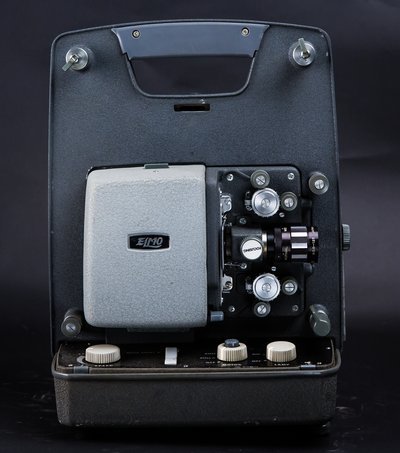
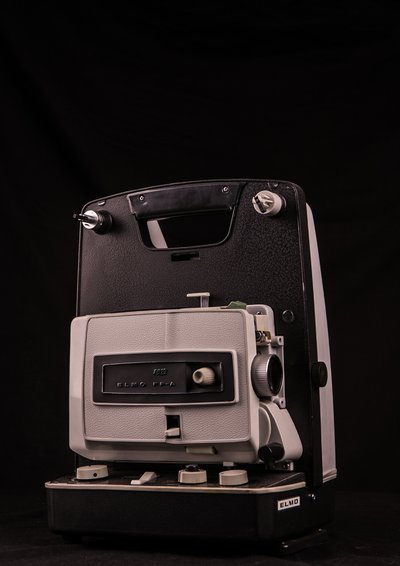
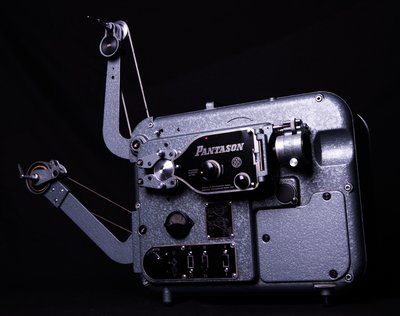
In 1921 Nagoya, Hidenobu Sakaki — called 'a genius of invention' — founded Sakaki Shokai. In 1927, the company produced Japan's first domestically manufactured 16mm projector (Model A). Renamed Elmo-sha in 1933, ELMO stood for 'Electricity Light Machine Organization.'
The first 8mm projector Hayabusa arrived in 1936. After a brief foray into still cameras (the Elmoflex TLR series, 1940s-50s), Elmo focused on what it did best: projectors and movie cameras. The C-300 Tri-Filmatic (1965-68) handled Super 8, Single 8, and Regular 8 with interchangeable backs.
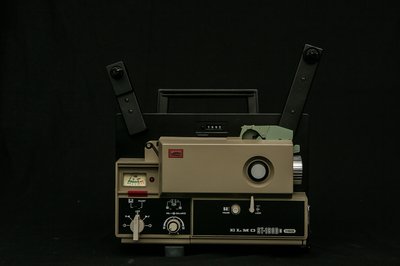
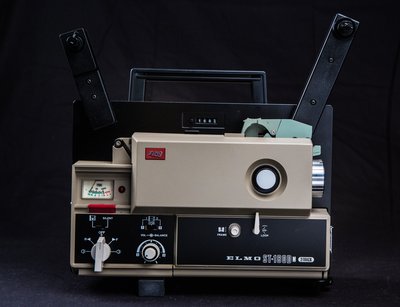
Elmo's true glory was the Super 8 sound projector. The ST series (ST-180, ST-600, ST-800) built the foundation, culminating in the 1978 ST-1200HD — the workhorse of home Super 8 sound projection. Then came the GS series. The GS-1200, especially the Xenon variant (1980-81) with its 250W xenon-arc lamp, was one of only three Super 8 projectors capable of theater-quality projection. Collectors call it 'the best Super 8 projector ever made,' with prices reaching $2,195.
When VHS killed Super 8, Elmo pivoted brilliantly. In 1984 they began making CCD cameras; in 1988 they invented the world's first document camera (EV-308), which made overhead projectors obsolete worldwide. Elmo considers this their most important invention since the 16mm projector. Today, listed on the Nagoya Stock Exchange, Elmo is an EdTech company — a rare success story of a film equipment maker surviving the digital transition.