In 1841 Vienna, brothers Karl Rudolf and Friedrich Ditmar opened a lamp workshop. Their 'Viennese Moderateur Lamp' — with an adjustable oil-supply mechanism — dominated world markets, and R. Ditmar became Austria's largest and most respected lamp manufacturer. The Kosmos burner (patented 1877) found 'countless imitators worldwide and was used in millions of households.'
After Rudolf's death in 1895 and the 1907 merger with Gebrüder Brünner (Austria's second-largest lamp maker), the company built a major factory complex in Vienna-Simmering. But electrification was making oil lamps obsolete. Around 1935, Ditmar diversified into the growing home movie market.
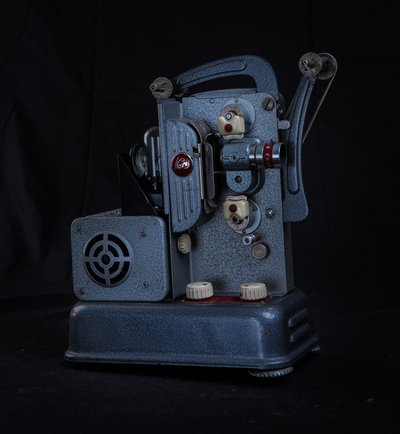
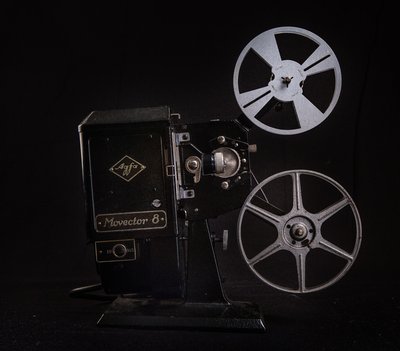
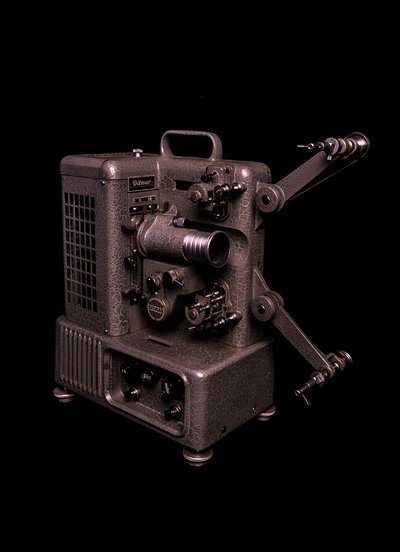
Their film equipment featured a uniquely clever design: dual-format projectors with two parallel film paths (double feed sprockets, double film gates, double take-up sprockets) where the lamp and lens mount slid sideways between formats. Available in 8mm/9.5mm, 8mm/16mm, and 9.5mm/16mm combinations, these machines are now held by the London Science Museum and ACMI in Melbourne.
The collapse of Austria-Hungary after WWI had destroyed Ditmar's empire-wide market. After the 1938 Anschluss, ownership transferred to Creditanstalt and Deutsche Bank, and in 1940 the company was absorbed into the state railway corporation (STEG), ceasing to exist independently. Postwar production continued briefly under Austria Email — a model 2960 projector dates to 1955 — but the Simmering factory closed in 1968, ending over a century of Viennese manufacturing.