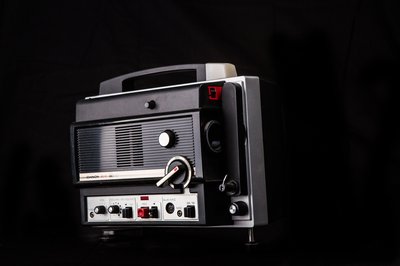
Few people know the name Chinon. But millions owned their cameras — sold as Revue, GAF, Sears, Argus, Hanimex, and eventually Kodak. The factory behind these brands was always the same.
Founded in September 1948 by Chino Hiroshi as Sanshin Seisakusho in Nagano Prefecture, the company started making camera lens frames. Located in the Lake Suwa basin — Japan's 'Switzerland of the East,' a precision manufacturing cluster near Seiko/Epson and Yashica — Chinon joined an ecosystem that made Nagano a global camera center.
In 1959 they developed the world's first zoom lens for 8mm movie cameras. By 1962 they were exporting Super 8 cameras and projectors under their own name. The Super 8 projector lineup (2500 through 9500 series) was substantial. In the 1970s, 35mm SLR cameras using the Pentax K-mount expanded the range, with firsts including Japan's first near-infrared autofocus (1981).
But Chinon's real identity was as an OEM factory. From 1966, Chinon-made cameras were sold under dozens of brand names. GAF's entire SLR line was Chinon. So were many Revue, Sears, and Argus models. The Kodak relationship started in 1985 with 35mm OEM and expanded to digital cameras in 1993.
Chinon didn't dramatically collapse — it simply lost its name. Canon and Nikon's autofocus revolution squeezed out smaller makers. By the 1990s 'Chinon' vanished from stores while the factory kept running for Kodak. In 2004, Kodak absorbed it completely as 'Kodak Digital Product Center, Japan.' The irony: Chinon survived the digital transition, only to be swallowed by Kodak — which itself went bankrupt in 2012.