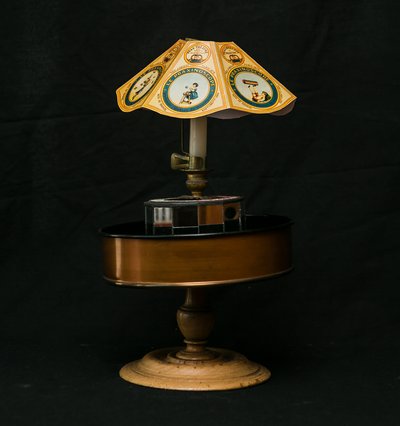
The Dream Before Cinema — Pre-cinema
Praxinoscope Theatre
Invented by Emile Reynaud in 1879, this device used mirror reflections to animate sequential drawings into moving images. Predating the Lumière brothers (1895) by 16 years, it is considered the direct precursor to animated film. An extremely rare device with few surviving examples worldwide, and the chronological starting point of this collection.
View Details →
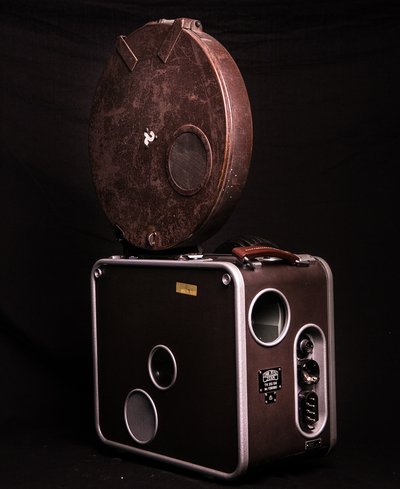
Master of Optics — Carl Zeiss
Carl Zeiss Jena TK 35/56
A 1956 TK 35/56 theatrical 35mm projector from the Carl Zeiss factory in Jena, East Germany. Founded in 1846, Carl Zeiss stands at the pinnacle of world optical engineering. During the Cold War, the divided Zeiss company continued producing theater projectors at the Jena plant, and the TK 35 became standard equipment in cinemas across East Germany.
View Details →
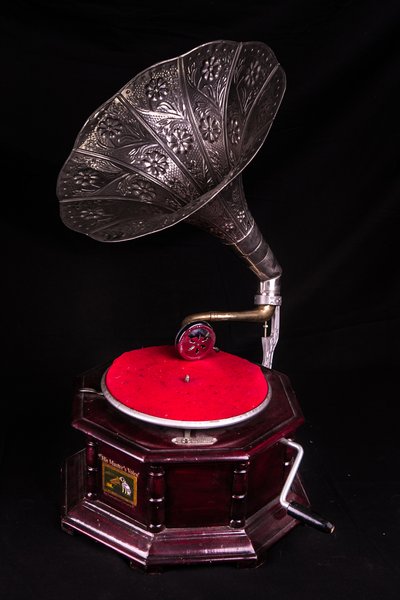
The Age of Sound — Phonograph
HMV Horn Phonograph
A 1910s horn gramophone by His Master's Voice (HMV) of England. Famous for its 'Nipper' logo — a dog listening to his master's voice — HMV is synonymous with the phonograph itself. This iconic design with its large horn is the very image that comes to mind when anyone thinks 'gramophone,' representing the era when Edison's sound reproduction technology entered the living rooms of the public.
View Details →
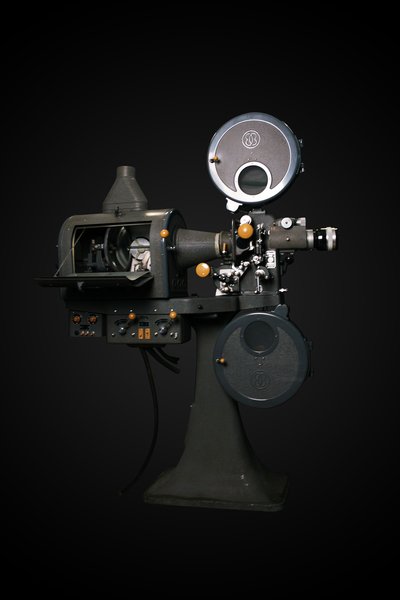
The Theater Era — 35mm Projectors
35mm Projector
A 1920s 35mm theater projector by Bauer of Germany. Since its founding in 1905, Bauer led the European theater projector market as Germany's premier manufacturer. The 35mm format — the theatrical standard established by Edison and the Lumières — made this projector a centerpiece of European cinemas during the transition from silent to sound film.
View Details →
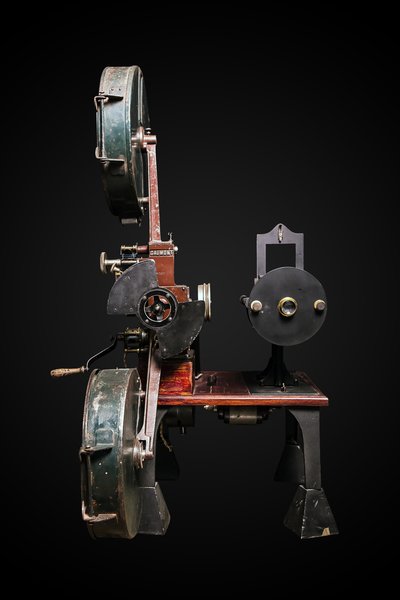
Birth of Cinema — Early Projectors
Gaumont 35mm Projector
A 1920s 35mm theatrical projector from Gaumont, one of the two pioneering French film companies alongside Pathé. This is the equipment that actually projected silent films to audiences in early cinemas.
View Details →
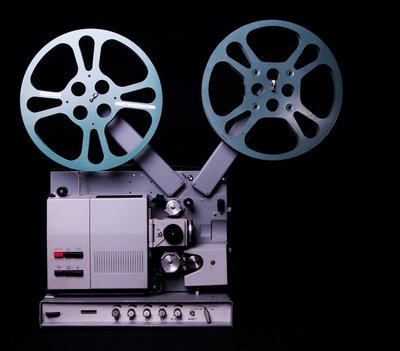
Cinema Comes Home — The Birth of Home Cinema
Pathé KOK Projector
Pathé's 1912 KOK 28mm home projector, featuring non-flammable safety film and an innovative hand-cranked dynamo that generated its own light. It symbolizes the historic turning point when cinema left the theater and entered the home.
View Details →
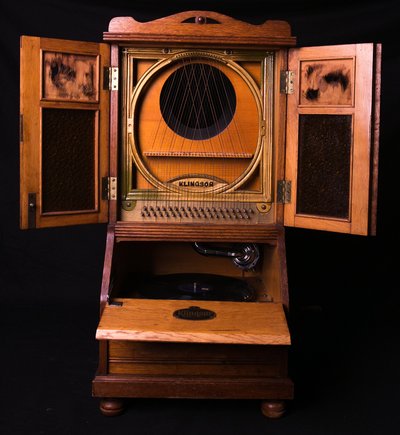
The Age of Sound — Audio Equipment
Klingsor Cabinet Phonograph
A 1910s Klingsor cabinet phonograph with an elegant internal horn design eliminating the external trumpet. Before cinema gained sound, this represented the pinnacle of home audio reproduction — the technology that would eventually merge with moving images.
View Details →
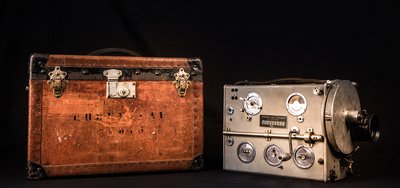
Behind the Camera — Film Production Equipment
Camerette 3 5mm Movie Camera
A 1940s Camerette 35mm cine camera by Andre Debrie, a key equipment manufacturer for the French film industry. This professional camera was used on actual film production sets, demonstrating the technical sophistication of mid-century filmmaking.
View Details →
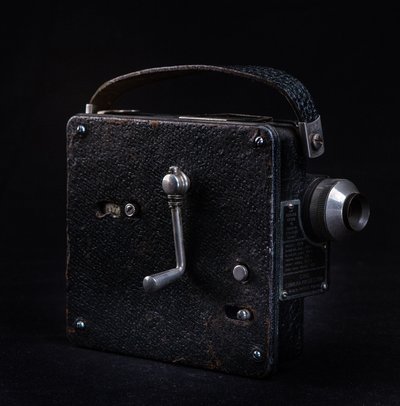
Behind the Camera — Film Production Equipment
Manual Crank-Style Movie Camera
A 1920s hand-crank movie camera from the era before electric motors. The cinematographer would turn the crank with one hand to drive the film mechanism — this is the archetype of early filmmaking, capturing how movies were literally hand-made.
View Details →

Korean Cinema Heritage
마음의행로
A 1942 poster for the Korean film 'Maeum-ui Haengro,' produced during the Japanese colonial period. Printed materials from this era of Korean cinema are extremely rare, making this an invaluable primary source for Korean film history research. The highest-valued item in the collection.
View Details →